Showing posts with label Brazil. Show all posts

Friday, May 12, 2023

Today I prepared a tasty de luxe reviro, a staple that came from poverty days

 l woke up today to find out that I had nothing to eat. I normally keep some tapioca (the manioc flour) which I use to make either tapioca or beiju (mandioc or cassava bread). After checking my food supply I found there on the cor
ner a pakage of wheat flour which immediately sent me the message: bye bye hunger. 

I got the manioc flour and decided to make a "reviro" a fantastic food tracing back its existence to Jesuit Missions time and revived during the hierba mate (erva mate) exploration period. Give and take we are talking about 400 years. 

I put two hands full of wheat flour in a small pot. Threw in one egg. Mixed it with flour, salt and added some milk until it reached the consistency to go to the frying pan. This is the de luxe version. Since it is a staple that orginated from the wisdom of poverty, my previous reviros were made with just wheat, water and salt and sometimes I forgot the salt. I share the photo of this beautiful reviro I am talking about.

P.S.: I do think that some classy hotels should bring reviro to the guests even if some chef might come up with some idea to make it not addapt but interesting to international audiences.   

Reviro is popular mainy in Paraguay but also made in Southern Brazil, part of Mato Grosso do Sul State and in at laest two provinces of Argentina: Misiones and Corrientes. In Puerto Iguazu gateway to  Iguazu (Iguassu) Falls there is a Revirso Festival and Contest with hundreds of participants. My suggestion ask your hotel or travel agent to bring some reviro for guests to taste.   

Saturday, December 07, 2019

Amy Winehouse Falls at Iguazu Falls in Argentina seen from Brazil: a Tribute

Amy Winehouse 
(If you own this photo, please let me know if I can keep it here, authorize or suggest a another)
In 2018 I was doing research work in order to write a book about the Iguassu / Iguazu Falls in of all its seven dimensions. It was almost evening, one day, nearly twilight, and it was already dark. I looked across the Falls over the canyon and as always before me there was that huge mass of "Many Waters".

But at that moment, a solitary cascade captured the whole attention of my field of vision. I could just see it. I looked at it (the cascade), smiled back and said: Hi, Amy Winehouse. Then I spent time staring at the thin, long cascade  so that its image glued on to my retina and to make sure that I would never be confused about its location among the hundreds even during flooding times.

Sunday, July 02, 2017

The 12th Cataratas Tourism Festival has just ended: will you come in 2018?


Official Grand Opening (Nilton Rolin / Itaipu)
This is just to share some memories and images of the 12th Cataratas Tourism Festival (Foz do Iguaçu Tourism Market ) that ended two days ago on Friday, 30th, 2017. By "Cataratas" organizers have intended to pinpoint The Iguassu Falls as the seat of the Tourism Festival held in the City of Foz do Iguaçu, from June 28 - 30. 
The Fair (NR)

Brazilian Minister of Tourism Marx Beltrão with Paraguayan Galoperas Jar Dancers (NR)
Foz do Iguaçu (Brazil) Puerto Iguazu(Argentina) and  Ciudad del Este (Paraguay) form the Three-Point Border where the three countries meet.  The Cataratas Festival is a umbrella event under which the following parallel events take place:     
Hackthoners at work (Festival Photo)
The Iguassu  Tourism Forum, Hackatour (Tourism Hackathon), The Argentine Wine Hall, The MICE Cataratas Hall,  Thermal and Spa Tourism Hall, Adventure Cataratas Hall,  E-Marketing Cataratas Halls, Shopping Tourism Hall, Cultural and Spirituality Hall, Gastronomy Arena, Regional Sustainable Product Expo, the Cataratas Hotel Expo and of course the flagship International Cataratas Tourism Fair. Summing up 1.780 exhibitors showcased  1176 brands in 209 stands in the fair. Over 8.000 visitors have been registered. The festival has grown 18% compared to last year's edition, according to organizer's information.

Thursday, February 25, 2016

Thank You World, Carnival and You conquered the Zica Outburst


Carla Daniele with 6-month-old son Victor in Foz do Iguaçu


Carnival in Brazil and everywhere else ended two weeks ago. And what I've got to say I will say it right now because otherwise time will make this thought incredibly old. I want to scream Thank you Brazil for not having canceled carnival 2016 because of the Zica Virus threat and explosion. Thank you World, because so many beautiful, brave people came in a time when all kinds of voices said that coming to Brazil would be dangerous. People came from Italy, from Portugal from the USA, from Canada, from Japan, Paraguay, Argentina, Colombia, Venezuela, France, the UK from all over.Thank you, Gracias, Grazie.

Rio 2016 Olympic Torch Relay to showcase diverse beauty of Brazil


Alex Ferro Photo of students holding cards with
relay host cities

The Rio 2016 Olympic Torch Relay will begin on 3 May, but a taste of the colour and excitement that it will spread around Brazil was experienced in Rio de Janeiro on Wednesday (24 February). In a celebratory event held alongside the Rio 2016 headquarters, the full relay route, the first torchbearers and the uniform they will wear were revealed to the sound of forró music accompanied by dancers on stilts.


Children weaved among the dancers, proudly holding aloft the names of all 329 towns and cities that will host the relay which will visit all five regions of Brazil between 3 May and  5 August, reaching 90 per cent of the population. Despite a hot summer sun that produced 40-degree heat, it was an energetic and multicultural celebration, as the relay and the Games themselves are expected to be.

Rio 2016 Olympic mascot Vinicius was the first to model the torchbearers uniform, showing off his samba skills in front of the gathered crowds and media. Brazilian judoka Érika Miranda, who was selected by Rio 2016 to be a torchbearer, also donned the white, yellow and green outfit, alongside others who have been invited to carry the torch by the relay partners Coca-Cola, Nissan and Bradesco.

Read more  on official Rio de Janeiro 2016 site

Check List of towns and cities

Tuesday, January 12, 2016

Visiting the Brazilian side of the Three Border Marker is no longer free

Official Authorization to charge
Visitors to the Brazilian Three Border Mark now run by the Cataratas do Iguaçu S.A. private company partly owned by Advent International will have to pay R$ 14.00 plus R$ 1.00 as a volunteer contribuiton to the Iguassu Tourismo Promotion Fund totalling R$ 15.00. Fee began to be charged as of this Monday, January, 11. In US dollars that will amount to USD 3,50 plus the 30-cent contribution to the Iguassu Fund (Fundo Iguaçu). The total will be US$ 3,80, less than US$ 4 which seem to be OK. In return for the fee visitors will have a Bar known as the Boteco Cabeza de Vaca that offers the chance to have a "drink with a view" and what a view! Foz do Iguaçu (the city) residents do not pay. Parking fee for cars is R$ 5.00.

The rest of Brazilians will pay the same as Americans, Canadians, Australians, Paraguayans, Argentineans. Brazilians over 60, will pay half the amount. Brazilian Children will also pay half the fee from 2 through 11 will also pay half the entrance fee.  As said abovce residents of Foz do Iguaçu do not pay to get in but will have to prove that they live in the city. They can do that by bringing a legal document with a photo on it plus a something that shows a local address, Voter's card may be accepted.   

On the Iguassu Tourism Promtion Fund (ITPF)
The ITPF survives thanks to a R$ 1 contribution made by tourists and vitiors to the Iguaçu National Park, the Itaipu Binational Dam Tourism Complex, hotels and now the Three Border Mark now officialy part of the Marco das Americas (Mark of the Americas) Tourism Complex. The money contributed to the ITPF may be used beyond promotional interests. One example fo that "other use" has been seen after September 7, 1915 when a storm with strong winds, rains and left over 50,000 people roofless. Records show that morte than 3,00 houses had their roofs completey destroyed. The fund contributed over 80,000 to help the affected community mostly within a five-kilometers radius from the Three Border Mark.        

Thursday, August 18, 2011

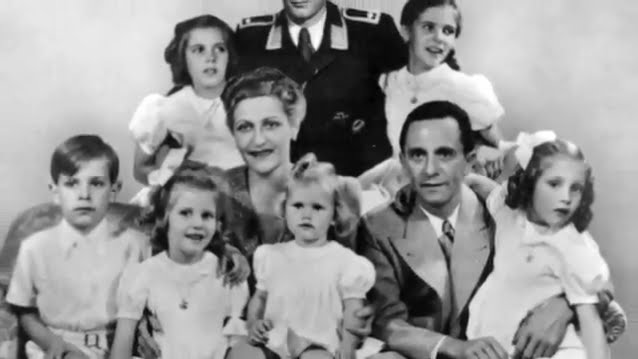
Magda Goebbels and Daughter in Brazil? That's what a new book is about

- (From the Editor's YouTube Book Trailer) A lady that called herself a Countess and lived in misery in Foz do Iguaçu for over 30 years may be the answer to many hidden facts about the Nazis that fled Germany after World War II. L. Franco and C. Pererira (names withheld) two MDs that live in the city that houses Iguassu falls have written a book about the story (Watch book trailer). Their conclusion is that Countess von Kirschberg as she was known in town was on board a KLM’s plane that flew from Schiphol to Rio de Janeiro via Zurich, Lisbon, Dakar and Natal in 1947. According to the story told by the Countess, the plane landed in Rio de Janeiro. From there the Countess, her Mother called Nora Friz, her father were then flown to Campo Grande, also Brazil, en route to Asuncion Paraguay. The last leg of the trip was overland on a 13-hour stretch to Encarnación, Paraguay.

The family was connected to high rank Nazis and the doctors learned after four years of interviewing and one year of hands on caring for the aging countess that her name and title were both fake – just the creation of a ‘persona’ that she had to live throughout her post war life. After the countess’s father died, Countess Mother and Countess Daughter embarked on an 18-year long trip that ended up bringing them to Foz do Iguaçu in 1972. For years there has been suspicion that Mother and Daughter were in fact Eva Braun and a Hitler's daughter.

Gerald Paine an American that might also answer for another name and nationality spent years chasing them while he tried to convince authorities about the duo's identity. Local newspaper articles from the 80s have vented the possibility. "They were nearly right - Franco and Christiane say - they just were a little bit off the track". The child would-be countess was really Hitler's daughter but not with Eva Braun. Likewise, the woman that the spies chased was not Eva Braun. The doctors discovered that the lady was in fact Magda Goebbles.

Brazil’s Editora Schoba’s 4-book collection is now available (Portuguese) rich in details, drawings and facts that show how the family left Europe, what the plan was; how a fake identity and a fake family were created in order to escape persecution. The Mother Countess supposedly died in 1978 in an accidental fire in the family shack. The Daughter Countess died in 2006.

L.Franco is an ophthalmologist and also has a bachelor degree in journalism. C.Pereira is a Gynecologist and was the Countess's doctor in a public health post in the area the countess lived. In the last years of life the countess accepted to tell much of what she knew and also gave the doctors a trunkful of papers, documents and drawings. Even the countess's cat Mieze was delivered to the MDs for protection. 

Most of the book’s material came from home-made, bound drawing books and diaries kept by the daughter Countess; One of the drawings show the KLM airplane that flew them across the Atlantic to what could be a safe and quiet place in South America. Click here for Portuguese-language site.

Wednesday, September 30, 2009

A political, cultural, economic, ethnical and social Chronology of the Triple Border

This is a tentative list. Research goes on. If you have something to ask or suggest please feel free to do so. Data from several sources. Still far from what I want. To help: limajac@gmail.com

1554 Irala arrives to the Lands of the Guayrá
1609 Brazil-based Portuguese ‘Bandeiras’ to guarantee possession of Western Lands
1609 Jesuit priests start catechization of Guarani-Mbya Indians
1620 The Alto Paraná (Py) is an important yerba mate producing region under Jesuits
1638 Portuguese ‘bandeirantes’ invade the Guarani Jesuit Missions of Guayra
1638 Bandeirantes take yerba mate to São Paulo
1765 Count Oyera Pombal asks for permission to found a Military outpost bordeing Paraguay.
1813 Paraguayan Dr. Francia, forbids export of yerba mate.
1853 The State of Paraná becomes autonomous from São Paulo
1865 - 1870 Triple Aliance War (Argentina,Brazil and Uruguay against Paraguay)
1869 Export of yerba mate is authorized in Paraguay
1876 The Serra Graciosa Road is open.Curitiba becomes a yerba mate export center
1879 Particio Escobar y Cia (& Co) granted permission to explore yerba mate in Alto Paraná for 10 years (Py)
1820 French botanist Saint-Hilaire classifies the yerba mate
1880
1881 Severo Fernandez and Ernesto Arnadey buys 50 square leagues of Paraná and Iguazu River land from Corrientes, Argentina.
1881 Lands are sold to Rafael Gallino who in turn sells them to Gregorio Lezama.
1881 Misiones is separated from Corrientes
1881 Federalization of Misiones
1881 Yerba mate exploit begins in Misiones
1882 Rudecindo Roca sworn in as Misiones first governor
1882 The Mate Laranjeiras Co starts exploiting yerba mate in Mato Grosso
1883 The Paraguayan Alto Paraná Company is born. Patrício Escobar's Concession dies.
1885 Paraguayan Government sells forests and 'yerbales'
1886 The Industrial Paraguaya S.A. is born (Paraguay's 1st huge real estate)
1887 Swiss-born Bertoni arrives to what is now Puerto Bertoni
1888 The Paraná Strategic Comission is founded in Paraná
1888 The popuation of the Mouth (Foz) of the Iguassu River: 324
1888 Gregorio Lezama sells Iguazu Lands to Martín Erracaborde & Co.
1889 November, 15, Brazilian Empire dies. Republic proclaimed
1889 The Iguassu Military Colony established
1890
1892 Military Colony is taken off the Strategic Commission
1897 Cap. Edmundo de Barros surveys the Iguassu Falls (BR) and projects a park
1897 Alberto Mugica é designado Juiz de Paz de Iguazu
1900
1901 Misiones Governor Lanusse goes to Buenos Aires to convince the Mihanovich Shipping Co to travel to Iguassu Falls
1901, The first tourist excursion comes to Iguazu on a Mihanovich boat
1902 Carlos Thays surveys the Iguassu Falls AR)and offers Plans for a Nat'l Park
1902 September, 3, the Olmedo Law is passed reserving the Iguassu Falls area to federal administration - thanks to Gov. Lanusse's efforts.
1903 The Brazilian and Argetninean Three-Frontier Landmark dedicated
1905 The Federal Tax Office installed in Iguaçu to be headed by Silveira Netto
1905 The Mate Laranjeira Co. creates a village called Monjoli, today's Guaíra
1906 Police District and Telegraph lines opened in Foz do Iguassu
1907 The Iguazu lands divided and sold at an auction. Domingo Arrayagaray bought the North part and Martin Errecaborde secured the Southern portion .
1907 The Gibaja y Nuñez MIning Co. builds the first hotel in Iguazú.
1912 Military Colony is dismantled. Powers handed over to the State of Paraná
1913 Governent buildings in Puerto Iguazu: Police, Subprefectura, School
1914 World War I begins
1914 June, 10, Foz do Iguaçu is born as Villa Iguassu
1916 First Notary Public opens in Puerto Aguirre
1916 April 24, Brazilian Air Hero Santos Dumont visits Puerto Aguirre (Puerto Iguazu's former name). He was coming from a PanAmerican Aviation Congress held in Santiago, Chile. He visited Buenos Aires and embarked on a tour to the Falls.
1916 Aviator and Santos Dumont crosses the river and visits the Falls from the Brazilian side and stay at a Hotel on Avenioda Brasil (Foz's first) and sleeps a night at shelter by the Falls.
1916 Santos Dumont learns that the Falls were privately owned and promisses to travel to Curitiba and talk to the State President and sugest the creation of a Park. He eventually goes meets the president. Three months later the state starts the process o acquire the 1.008 hectares of land around the Iguassu Falls (Br)
1916 The Government of the State of Paraná declares the land around Iguassu Falls as of Public Interest based on a 1912 law. The owner, a Spaniard named Jesus Val takes government to court.
1919 Jesus Val accepts a deal to sell the land to the State of Paraná
1923 German-born Catholic Father Guilherme Maria Thiletzek, Foz's first, arrives in town.
1924 Whole population of Villa Iguassu seeks refuge in Puerto Aguirre asthey run from the Revolutionary Advance Column led by Isidoro Dias Lopes. Invaders were kicked out by Marshal Cândido Rondon
1928 Argentina buys the lands of Arrayagaray in order to create a National Park and Military Zone.
1929 Puerto Franco, Paraguay is founded as the seat of an Obraje
1932 The Brazilian Military returns to Foz do Iguaçu (guassu Falls). This time a 152-soldier strong Army Isolated Company was formed. The Army's return to the border!
1932 – 1935 The Chaco War. Paraguay and Bolivia goes to war over the Chaco Region.
1934 Army's Headquarters inaugurated.
1935 Law 12.103 (AR) creates the Parque Nacional Iguazú (Iguazu Nat'l Park -AR)
1935 Iguassu Falls' First Airfield opens. Lt.Aroldo Rodrigues flew the first plane in.
1937 Brazilian Federal Government builds a large wooden Cataratas Hotel. On May,2,the building is lost to fire. It is said that someone tryed to incinerate a beehive.
1938 The Municipality of Tacurupucu (PY) is created as a 3rd Category Municipality
1939 World War II Begins
1939 Brazil Presidente Getulio Vargas signs a Decree creating the Parque Nacional do Iguassu (Iguassu National Park).
1941 Limits for the Iguazu (Argentina) National Park and the city are agreed upon
1941 Foz do Iguaçu Airport Building opens by the the 1935 airstrip. Official name: Aeroporto do Parque Nacional do Iguassu (Iguassu national Park Airport).
1943 Federal Government creates the Iguassu Federal Territory. The capital was to be (but never was) the city by the same name. That was a bite attempt on Paraná State Lands.
1943 The 1st Border Battalion created.
1944 The First Government Delegation on the Paraguayan side opens at Itakyry
1946 The Iguassu Federal Territory is dismantled. The Getulio Vargas dictatorship fell one year before.
1950 First Lebanese immigrant comes to Foz do Iguaçu
1954 Stroessner comes to power after a coup he called "revolution"
1955 Brazil-Paraguay commission to build "the road" conectoing the two countries
1956 Maio 26, Agreement to build an International Bridge signed
1956 June,10, COnstruction Act is signed
1957 Florida Hassan El Nassr,first child of Arab descent is born in Foz do Iguaçu.
1958 Syrian-Brazilian Cultural Associatons created
1959 February, 3, Aeroporto Alejo Garcia Inaugurated in Paraguay
1960
1962 First Arab marriage in Foz do Iguaçu.
1961 Jan 26, Inauguration of the Paraguayan Three-Frontier Mark
1965
1966
1977 1st FARTAL
1980 Arab-Palestine-Brazilian Society created
1981 The Foz do Iguaçu Islamic Beneficent Society is founded
1981 The Foz do Iguaçu Islamic Beneficent Cutural Center is founded
1981 Corner Stone for the Omar Ibn El Khatab is laid down
1982 Brazilian Arab School innaugurated using dependencies of the Mosenhor Guilherme State School
1983
1985 Universidad Nacional del Este (Paraguay) brings first University Course to Eastern Paraguay
1986 The first FERNATEC Fair is launched
1988 The President Stroessner (Ciudad del Este) Bus Staion Rodoviária CDE
1989 The Estadio Tres de Febrero (Februry 3rd Stadium) innaugurated.
1992 Lady Di, Helmut Kohl and other dignitiaries visited Foz do Iguaçu
1992 First Department governors dedicated aaccording to new 1992 Paraguay Constitution
1993 ABAV (Brazilian Association of Travel Agents)congress hed in Foz do Iguaçu
1994 The Druze Brazilian Home of Foz do Iguaçu opens
1996 Arab Brazilan School opens
1998 The Arab Brazil Beneficent Assocation opens
1999 Copa América (America Soccer Cup) held in C.del Este.
1999 Arab Brazilian Evangelical Church founded
2001 Lebanese Brazilian School first to introduce Arabic as curriculum language
2009 Oct,18, Foundation stone for the Foz do Iguaçu Druze Brazilian Home laid down.
2009 November, Arab Brazilian School's First High School Class graduates.


2010 Jan,12, Law passed creates UNILA Federal University of Latinamerican Integration
2010 34th Motorized Infantry Battalion sends soldiers to Haiti
2010 Aug, 16. Unila's inaugural class 
2013 ESPN's X-Games held in Foz do Iguaçu.  
2013 The 34th Motorized Infantry Battalion becomes the 34th Mechanized Btl (34th BIMEC)  
2013 March 8, Bus company hires Aline de Moraes as the cty first woman bus driver
2014 Aug, 15. First Unila graduation ceremony 
2014 Unila's starts Medicine Course
2015 Waldo Vieira founder of conscientiology dies at 83 

Friday, May 01, 2009

Eating out in Foz do Iguaçu: Tips and Ideas


Foz do Iguaçu restaurants in the Rua (Street)Marechal Deodoro eatery zone!

Every single hotel in Foz do Iguaçu has a restaurant. From the five-star all the way down to the no-star-at-all. But I am not talking about hotel restaurants in this post. What I have in mind here are the restaurants in town - mainly downtown.

The photographs above show two downtown restaurants. One Italian, Bello Piatto - see the colors? The other one, in this cute little house built in the 30s,historical or old by Iguaçu staandards is called Armazém (Warehouse). The food here is beef and meat-based. Once a week there is shrimp extravaganza. The Armazém belongs to a guy who came from a city called White Duck (Pato Branco) and seems to has been here forever.

This guy started out with a restaurant called Trapiche - specializing in seafood. He runs both nice places on Rua Marechal Deodoro. All these restaurants are close by and they seem to form a restaurant alley. None were made with the tourist in mind but everybody is welcome. Local people flock to these places. It is about more than eating. It is about seing and being seen. Good place to show off (for them). Another good and traditional place (I've known it for over 20 years) is the Tempero da Bahia, two blocks down from the Trapiche, the owner is from Bahia and tempero means "spice" and can have nice seafood, shrimps, caiprinha and music.

Other restaurants on the same street include the Hokka Sushi (japanese,Chinese) and across from the Hokka Sushi is the Verdão (Big Green) nickname for the Bier Garten where German mostly and English are understood. These two places are on the corner of Marechal Deodoro Street and Avenida Jorge Schimmpfeng - Jorge who? was the city's first mayor in 1914. If you can't get the Schimmlpfeng sound straight try this tip by using my helpful Chinese pronunciation transliterarion: Xim Me lü pu Feng or (Japanese Shi-meru-pu-fen-gu).

Three of the four corners in this point are occupied by restaurants.
One of them is the local MacDonald's outlet. There are bus stops near the MacDonald's going into town, to the Urban Bus Terminal (TTU), Rodoviária (Bus Terminal) and Paraguay. Across from MacDonald's there is a bus stop for buses going to the Falls, to Argentina, the Airport and good for those styaing in all hotels along the Avenida Cataratas (Bourbon,Mabu, Carimã, Gran Via, Viale Bristol) and the Paudimar Hostel. Taxis are readily available along the Rua Marechal. So there is no excuse for you to stay in the hotel wishing you were having fun sonewhere else.
Buses till midnight- after that it's a question of miracle and suffering, beware!


Other "cuisine" ideas in town (hold on for links)

Arab
Shawarma places
More Chinese
Churrascarias
Low income youth hangouts
University hangouts
Classy
Other

Friday, February 13, 2009

The Greater Tres Lagoas Area of Foz do Iguaçu


Photos: Tres Lagoas' Saint Peter's Parrish (Paróquia São Pedro) and Bairro (neighborhood) pioneer Edmundo Roberto Kinner


The city of Foz do Iguaçu is divided into 12 regions or areas - for administration purposes. Each region is identified by a number (R-01) or the name of the most prominent bairro in the region or area. For instance, R-01 or Region One is known as the Greater Tres Lagoas Area. The main neighborhood in this case is called Três Lagoas which started out with somebody selling smaller land parcels mostly chunks taken off a small agricultural property and sold to Class E, wage earners to be paid in soft and nearly never-ending 100-installment plans. Some of the bairros in this and in other city areas were the result of invasions or occupations (the choice of either word will denounce political or ideological preference). There are over 9.000 basic education students (from ages 2 to 9) enrolled at 9 city schools.

Touristically speaking the area owns some of the city's smaller attractions like the Itaipu Dam Beach Area, some clubs, ultralight aircrafts owners' association of a sort, a newly-built katamaram boat for sunset cruises and so on.

Also, sadly and infamously, the Três Lagoas Area of town also owns the city's correctional district with a hell-on-earth type of horrible jail - that will soon be closed off for good. A new top security State Pennitentiary has been built and as of lately also a State Prison for people awaiting judgement. There will soon be a Female Pennitentiary and I also heard about somnthing like a Teenage Jail for adolescent "offenders". The Jail Sector of the Tres Lagoas Area is called Três Fronteiras Residential Park - and this is the kind of real estate enterprise that didn't prosper. Thanks to the abundance of jailhouses around prices, for land and houses around are going down.

Also what is going down is the once-flourishing city red light district. This district prospered during the Itaipu Dam Construction Days when 48.000 Paraguayan and Brazilian male hands joined to build the world's largest dam.


List of the 12 Regions of Foz do Iguaçu - may be good to someone, who knows? Numbers following region's name are about number of barrios in the region.

Region 01 - Três Lagoas Area (38)
Region 02 - Via "C" Area (27)
Region 03 - San Francisco Area (21)
Region 04 - The Porto Meira Area (31)
Region 05 - Jardim San Paulo Area (22)
Region 06 - Jardim America Area (19)
Region 07 - Imperatriz Park Area (22)
Region 08 - Vila "A" - AKLP Area (24)
Region 09 - City Center and Vila Yolanda Area (20)
Region 10 - Campos do Iguaçu - Fields of the Iguaçu Area (29)
Region 11 - The Carimã Area (10)
Region 12 - Rural Area

The purpose of dissecting the city like this is to make a point about the importance of barrios (neighborhoods) for local economies. IN the same extant that we live in the "city" and not in the Republic; as far as cities are cncerned, our lives happen in neighborhoods. Most of the attractions people see belong at first to the neighborhood where they are. Sometimes you may stay in top five-star hotel located in a neighborhood that the tourist will never learn about. Some times it is bad for business.

There is a Rural Area North and a Rural Area South
In the case of Foz do Iguaçu, here is a list of the possession of the Rural Area South:
a) The Foz do Iguaçu-Cataratas International Airport (Yes, hyphenated)
b) Over 106 hectares of land within the Iguassu National park
c) Park's Visitor Center
d) The Cataratas Hotel
e) The World famous Iguassu Falls
f) The Conscienciology Research Center
g) The Cognopolis Neighborhood - comprising
h) City's fishing and leisure farms

Thursday, February 05, 2009

The Iguaçu National Park-Brazil: a model to the world ?

Last year an English journalist who had already interviewed me before, so I can call friend, sent an e-mail asking me about the Iguaçu National Park and how I felt, how the local community felt to live near or around a Park that is a model to the world. A model to the world? - I thought. It can not even be a model for the rest of Brazilian National Parks. I don't know how this model idea has spread out, but a I hear this being repeated so much that I am affraid it might become the truth, you know the only truth. So let me tell what I remember about "our" Parks that also happens to be a World Heritage Sites.

Since January, 1st, 2000, the Iguassu Falls Visitation Area (VA) on the Brazilian side, and its counterpart on the Argentine side one year before, were handed over as concessions to privately-owned, especially-created companies for that specific purpose. That is the purpose of administering the new or improved infrastructures to cater to tourists needs. These have included: New Visitors Centers, Alternative Transportation Within the National Parks, food and catering, restaurants, bathrooms and similar services.

Before the aforementioned dates the tourism-related activities in the Visitation Area were the responsibility of the Administración de Parques Nacionales (National Parks Administration) in Argentina and of Ibama* (Brazilian Institute for the Environment) on the Brazilian side. This means that Park authorities had to be concerned with such wordly things as collecting entrance fees, making arrangements with travel agents and making sure that toilets were clean (they never were) and that toilet paper was not missing (they were always missing). In those days, Government concessions were nearly synonym of "free concessions" or very low, symbolically-priced permissions for friends or political allies to operate. There were big money concessions running for as little as 500 USD a year.

In the 90s Governments changed. Presidents Fernando Collor in Brazil and Carlos Saul Menem in Argentina were ellected and both announced that privatization was the way out of financial squeeze and was, as well, the passport to a First World Society. Argentina went ahead and sold everything from airports to water companies, from oil companies to road and the mail. Brazil also sold large companies in the mining and telecommunication fields among others. The environment was the next target and those money-making National Parks were the models to play and experiment with. The Iguassu Tri-Nation Area is seen as a Laboratory for the Mercosul countries (In tourism, police work, international conventions on crime, smuggling and integration). If it works here, should work anywhere else. In addition, both Parks, the Iguaçu (Brazil) / Iguazú (Argentina) National parks receive a million visitors a year (it may be that visitors are the same and not two million according to the 2 + 2 = 4 formula) and that means good money.

Next postings
Different prices and entrance fees
Parks' revenue increase
The local communities losses: Brazilian story / Argentinean story
Other parks to go
Alternative Transportation Brazilian and Argentine Versions
Ibama makes way to Chico Mendes Institute
And more

Wednesday, April 23, 2008

Brazilian Yellow Fever Map


I will come back with more. In the meantime I just want to translate what the colors above mean: green for very risky; red for risky; yellow for low risk area and blue no risk at all. As far as this blog is concerned our area of interest, the Iguassu Falls and neighboring border areas are considered risky for the wide type yellow fever. The urban type yellow fever has been under control for years. The photo above has been scanned from official material distributed by the following Brazilian Government agencies and ministries: Brazil Tourism (Embratur)Sanitary Authority, Ministry of Tourism, Ministry of Justice and Ministry of Health.

Thursday, December 13, 2007

Bus to the Amizade Bridge


Bus to Brazil-Paraguay Friendship Bridge

Back to the living world of the TTU, following this platform you will see signs announcing buses that will go to the Ponte da Amizade (Puente de la Amistad or Friendship Bridge), Jardim America and Jardim Itaipu. There are a few numbered lines: 110/ 125/ 130/ 325/ 355. Where will they go? Mostly to neighborhoods that you may not have the time or interest to see – right now. Buses going to the Ponte da Amizade (Bridge) are very important to the city. They are the physical conection between Foz do Iguaçu (Brazilian) and Ciudad del Este (Paraguayan). They are also the link between the Brazilian State of Paraná and the Paraguayan Departamento (Department like the French) of Alto Paraná. Needless to say that he Bridge is above all a bridge between Brazil and Paraguay. Most of the buses stopping at this “Bus Stop” come from areas like Porto Meira (that is where the Three Borders’ Landmark, Jardim das Flores (Flower fo Gardens) and Profilurb, all in the Greater Porto Meira Area. Up to now thousands of Brazilian (Iguassuan) wage earners have to cross the border to work as for Paraguayan shops in all kinds of jobs and in varying degrees of informality or formality. A sad reality!

Featured Post

The Único Rechargeable Bus Card for Tourists: feel like the locals

Image from Agência Comtato Attention all Free Independent Travelers (FIT) and whomever likes to use local transportation and s...